Taste of Tradition: How Baucau’s Tables Tell East Timor’s Story
You know that feeling when a single bite tells you more about a place than any museum ever could? That’s Baucau for you. Nestled in the hills of East Timor, this quiet city doesn’t shout for attention—but its food speaks volumes. From smoky grilled fish to corn-based stews passed down for generations, dining here isn’t just eating. It’s a conversation with culture, history, and community. In a country still emerging from decades of struggle, food in Baucau remains a quiet act of resistance, resilience, and remembrance. This is not cuisine designed for spectacle, but for sustenance, connection, and continuity. To taste it is to understand a people who have preserved their identity one meal at a time.
The Heartbeat of Timorese Cuisine: Simplicity with Meaning
Timorese cuisine, especially as it lives in Baucau, is born of necessity and shaped by the rhythms of the land. There are no elaborate sauces or imported delicacies here—just honest ingredients prepared with care and consistency. The foundation of most meals is maheu, a thick porridge made from ground corn, often served with a side of salted fish or a chili-infused sambal. Cassava and sweet potato appear in nearly every household, roasted, boiled, or mashed, depending on the season. These staples are not chosen for flavor alone, but because they grow reliably in East Timor’s rugged terrain and tropical climate.
What defines Baucau’s food culture is its deep connection to self-reliance. For generations, families have relied on subsistence farming and small-scale fishing to feed themselves. This reality has shaped a culinary tradition that values preservation—salted fish, sun-dried vegetables, fermented corn—over perishable luxuries. Coconut milk, when available, adds richness to stews, while wild herbs and local chilies bring depth and heat. The result is a cuisine that is modest in appearance but profound in meaning: each dish reflects a history of adaptation, survival, and quiet dignity.
One of the most distinctive aspects of traditional cooking in Baucau is the use of earth ovens, known locally as *tahanu*. Meals are prepared by layering food in banana leaves, placing them over hot stones buried in the ground, and covering the entire pit with soil. This slow-cooking method, often reserved for special occasions or communal gatherings, brings out deep, smoky flavors that cannot be replicated on a stove. It’s a technique passed down through generations, requiring patience and precision. In a world obsessed with speed, the tahanu stands as a symbol of enduring values—time, care, and shared labor.
Where Locals Eat: From Market Stalls to Backyard Kitchens
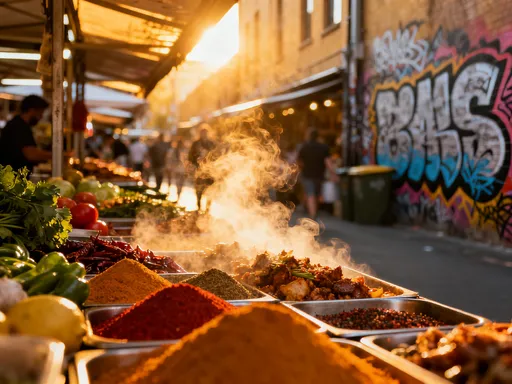
If you want to taste the real Baucau, you won’t find it in tourist-facing restaurants. Instead, you must follow the morning light to the Baucau Municipal Market, where the day begins before sunrise. Women in traditional *tais* textiles lay out their harvests on woven mats—bright red tomatoes, bundles of lemongrass, baskets of hand-pounded rice, and slabs of dried tuna caught just offshore. The air is thick with the scent of wood smoke, ripe mangoes, and grilled corn. This is not a curated food hall, but a living marketplace where food moves from farm to table in hours, not days.
Scattered among the produce stalls are small *tukun*—family-run food stands that serve hot meals from dawn until mid-afternoon. These are not fancy setups. A tukun might consist of a single gas burner, a few plastic stools, and a chalkboard with three daily offerings. But within that simplicity lies authenticity. One popular dish is *kakur*, a stew made with tender chunks of chicken or goat, simmered with turmeric, garlic, and coconut milk until the flavors meld into a golden broth. It’s served with boiled cassava or corn cakes called *kabolo*, which soak up the sauce with earthy satisfaction.
What makes these tukun remarkable is their role in daily life. They are not just places to eat, but hubs of community. Farmers stop by after selling their crops. Schoolchildren gather after class. Elderly neighbors sit together, sharing stories over small cups of strong tea. There is no menu in the Western sense—what is offered depends entirely on what was fresh that morning. This spontaneity is part of the charm. To eat at a tukun is to surrender to the rhythm of local life, to trust that what is available is exactly what you need.
A Meal Like No Other: The Experience of Communal Dining
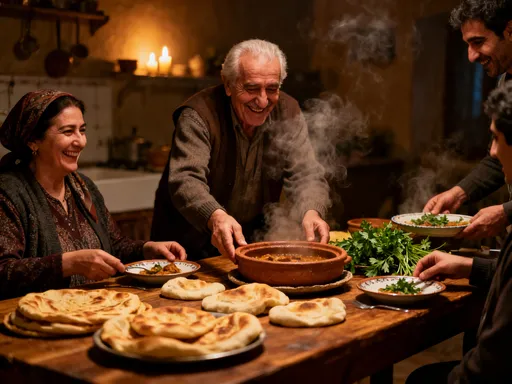
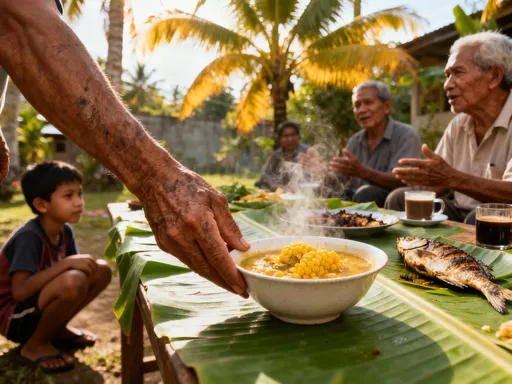
In Baucau, food is never just about nutrition—it is a social act, a gesture of welcome, a form of storytelling. Meals are typically served on low wooden tables, often placed under the shade of a mango tree or on a covered porch. Diners sit on the ground or on small stools, eating with their hands, using pieces of corn cake or banana leaf to scoop up stews. There is no rush, no strict course structure—dishes are brought out as they are ready, and everyone eats together from shared bowls.
One of the most memorable experiences a visitor can have is being invited into a local home. These invitations often come unexpectedly—after a brief conversation at the market, a shared ride on a public minibus, or a simple smile exchanged on the street. Once inside, the host family moves with quiet efficiency, preparing extra portions, warming up rice, and offering the best seat to the guest. Refusing food is nearly unthinkable; to do so might be seen as rejecting the relationship being offered.
The rhythm of a shared meal in Baucau is slow and deliberate. Bowls are passed hand to hand. Laughter rises and falls with the conversation. Children eat quickly and then run off to play, while elders linger, sipping water and recounting stories from the past. There is an unspoken rule: no one leaves the table hungry. Even if food is scarce, portions are adjusted so that everyone is fed. This practice is not just about generosity—it is a cultural principle, rooted in the belief that community survival depends on mutual care.
Coffee and Culture: Baucau’s Highland Brew Tradition
East Timor is one of the few countries in the world where coffee is grown, processed, and consumed primarily by local communities. In Baucau’s highland villages, Arabica beans thrive in the cool, shaded slopes, cultivated by smallholder farmers using organic methods passed down for over a century. Coffee is not just a crop—it is a cornerstone of identity, economy, and daily ritual.
The traditional way of preparing coffee in Baucau is a hands-on process that begins with roasting green beans in a flat pan over an open flame. The beans are stirred constantly until they darken and release a rich, smoky aroma. Once cooled, they are ground using a wooden mortar and pestle, then brewed in a small metal pot with boiling water. The result is a strong, almost syrupy brew served in tiny cups, often sweetened with palm sugar. This method, known as *kafé tora*, is more than a way to make coffee—it is a performance of patience and presence.
Coffee is shared at nearly every meaningful moment in Timorese life. It is offered to guests as a sign of respect. It is served during community meetings to mark the seriousness of discussion. It is part of reconciliation rituals, where elders drink together to settle disputes. In Baucau, a cup of coffee is never just a drink—it is a bridge between people, a symbol of peace, and a marker of time well spent. For visitors, accepting a cup is not merely polite; it is an entry into the social fabric of the community.
Challenges and Changes: Preserving Authenticity in a Globalizing World
Despite the richness of its food culture, Baucau faces growing pressures that threaten the continuity of traditional eating habits. Younger generations, influenced by global media and urban lifestyles, are increasingly turning to imported foods—white rice, instant noodles, canned goods, and packaged snacks. These items, though often less nutritious, are seen as modern, convenient, and sometimes even prestigious. As supermarkets and convenience stores slowly appear in the city, the reliance on homegrown and locally sourced food is beginning to shift.
Urbanization and economic change are also altering land use patterns. Some families are selling their farmland to developers or moving to cities for work, reducing the availability of fresh, locally grown ingredients. At the same time, climate change is affecting crop yields, making it harder to grow traditional staples like corn and cassava with the same reliability as in the past. These challenges are not unique to Baucau, but they are felt deeply in a country where food has always been tied to cultural survival.
Yet, there are signs of resilience. Local organizations and community leaders are working to revive interest in traditional agriculture and cooking. School programs now teach children how to grow vegetables and prepare ancestral dishes. Cultural festivals celebrate the making of tais cloth, coffee, and traditional foods, drawing both locals and tourists. Some entrepreneurs are launching farm-to-table initiatives, connecting small farmers directly with local eateries. These efforts are not about rejecting modernity, but about ensuring that progress does not come at the cost of cultural erosion.
How to Experience Baucau’s Dining Culture Responsibly
For travelers, experiencing Baucau’s food culture is a privilege, not a right. It requires humility, openness, and a willingness to step outside of comfort zones. The first step is to seek out authentic spaces—local markets, tukun, and community events—rather than tourist-oriented restaurants. When entering these spaces, it’s important to observe quietly, smile, and ask permission before taking photos. Many locals are welcoming, but they also value respect and dignity.
When it comes to trying food, be adventurous but mindful. Sample dishes like kakur, maheu, and grilled fish, but avoid treating them as exotic novelties. Eat with your hands if invited, and follow the lead of those around you. If you’re offered a meal in a home, accept graciously, and express gratitude—whether through words, a small gift, or simply by participating fully in the moment. Remember, you are not just a guest; you are a participant in a living tradition.
Language can be a barrier, but it doesn’t have to be a wall. Simple phrases in Tetum, such as *Obriagat* (Thank you) or *Boa dia* (Good morning), go a long way in building connection. Even a smile and a nod can open doors. The goal is not to become an expert, but to show that you care about the people and their way of life. Responsible dining means leaving a positive impression—supporting local vendors, minimizing waste, and carrying the experience with you as a lesson in gratitude and connection.
Conclusion: More Than a Meal—A Cultural Invitation
Dining in Baucau is not an event; it is an invitation. An invitation to slow down, to listen, to share. It is a reminder that the most profound travel experiences are not found in grand monuments or luxury resorts, but in the quiet moments of human connection. Every meal here tells a story—of resilience in the face of hardship, of identity preserved through generations, of community built one shared bowl at a time.
In a world that often measures value in speed, efficiency, and spectacle, Baucau offers a different rhythm. Here, food is not rushed, not branded, not commodified. It is grown, prepared, and shared with intention. To sit at a table in Baucau is to be handed a piece of living history, written not in textbooks, but in the taste of roasted corn, the warmth of a shared fire, and the quiet pride of a people who know who they are.
Travelers may come to East Timor to see its landscapes or learn its history, but they leave remembering its tables. Because in Baucau, every bite is more than flavor—it is memory, meaning, and belonging. And in that, it offers something rare and precious: a way of eating that is also a way of being.