You Won’t Believe What I Found Hiking Through Northern Ireland’s Wild Side
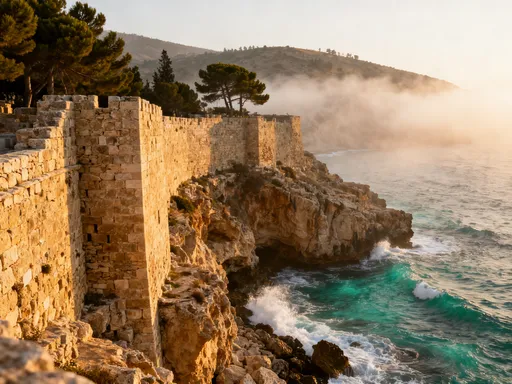
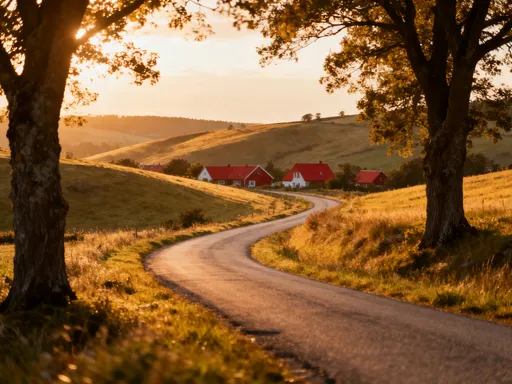
Northern Ireland’s raw, untouched landscapes stunned me in ways I never expected. From misty cliffs to silent glens, every turn felt like stepping into a living postcard. I went looking for peace—and found something much bigger. This isn’t just about scenic views; it’s about how nature here grabs your soul and doesn’t let go. If you’re craving real, unfiltered beauty, you gotta see this for yourself. The air tastes different here—cleaner, sharper, as if it carries stories from centuries past. There’s a quiet power in these hills and coastlines, one that doesn’t shout but whispers, drawing you deeper with every step. For travelers seeking authenticity over spectacle, Northern Ireland offers a rare gift: a landscape that feels not just seen, but truly felt.
Why Northern Ireland’s Natural Beauty Stands Out
Northern Ireland’s geography is a masterpiece shaped by time, fire, and water. Unlike the more manicured countryside of southern England or the heavily touristed peaks of the Lake District, this region remains refreshingly unpolished. Its dramatic coastlines were carved by ancient volcanic activity and relentless Atlantic waves, while inland, rolling green hills stretch endlessly under moody skies. The land feels alive—not curated for visitors, but enduring on its own terms. This authenticity is what sets it apart. You won’t find artificial viewing platforms at every bend or souvenir shops crowding trailheads. Instead, you’ll encounter raw terrain, unpredictable weather, and moments of solitude so profound they border on sacred.
The region’s geological history adds another layer of fascination. Around 60 million years ago, intense volcanic activity beneath what is now the North Atlantic pushed molten basalt upward, forming vast lava plateaus. As the rock cooled and contracted, it cracked into the iconic hexagonal columns seen today at places like the Giant’s Causeway. Over millennia, erosion stripped away the softer rock, revealing these formations in dramatic fashion. This same volcanic legacy created the Antrim Plateau, a sweeping upland area that feeds into deep valleys and fast-flowing rivers. The result is a terrain rich in contrast—coastal cliffs plunge into churning seas, while inland, mist-clad mountains rise above silent forests.
What struck me most during my journey was the sense of discovery. Even on well-known trails, it’s easy to walk for miles without seeing another soul. There’s no forced interaction, no performative tourism—just the sound of wind through heather and the occasional call of a curlew overhead. For many travelers, especially those accustomed to packed European destinations, this quiet authenticity is a revelation. It’s not that Northern Ireland lacks visitors; it’s that the landscape is so expansive, so varied, that it absorbs them effortlessly. Whether you’re walking along a windswept beach or climbing a remote hillside, the feeling of being a small part of something ancient and enduring is impossible to ignore.
The Giant’s Causeway: More Than Just a Tourist Spot
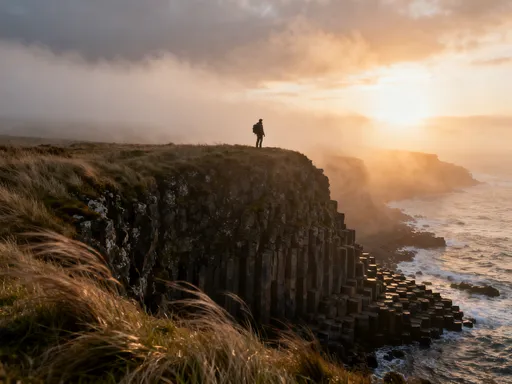
No visit to Northern Ireland feels complete without standing among the basalt columns of the Giant’s Causeway. Yet, to experience it only as a checklist attraction is to miss its deeper magic. When I arrived just after sunrise, the site was nearly empty. The early light washed the stones in soft gold, highlighting their angular precision and weathered surfaces. With no crowds, no chatter, I could hear the sea pulsing beneath the rocks, feel the cool mist on my face, and truly absorb the scale of this natural wonder. The columns, some towering over ten feet high, stretch like a stone staircase into the ocean—an image both surreal and deeply grounding.
Geologically, the Giant’s Causeway is the result of rapid cooling of thick basaltic lava flows. As the molten rock solidified, it contracted and fractured into polygonal shapes, most commonly six-sided, though some have four, five, or seven sides. These columns form a pavement that extends both above and below ground, with over 40,000 interlocking stones visible along the coastline. Scientists agree this was a natural process, but local legend tells a different story—that the causeway was built by the giant Finn McCool to reach Scotland and fight his rival. Whether you favor science or myth, the effect is the same: awe. There’s something humbling about walking across a formation that began millions of years before humans existed.
To truly appreciate the site, timing is everything. Most visitors arrive between 10 a.m. and 4 p.m., drawn by tour buses and guided excursions. But arriving early—or even later in the evening—transforms the experience. Not only are the crowds thinner, but the changing light alters the mood of the place entirely. Morning fog softens the edges of the rocks, while late afternoon sun casts long shadows that emphasize their symmetry. The visitor center, operated by the National Trust, provides excellent exhibits on both the geology and folklore of the area, but I recommend saving that for after your walk. Let the landscape speak to you first, without interpretation. And when you do explore the surrounding trails, consider taking the path toward the Shepherd’s Steps—a steep descent of nearly 200 stone steps that leads to a secluded cove where the sound of the sea feels personal, intimate.
Exploring the Causeway Coast Beyond the Causeway
While the Giant’s Causeway draws the headlines, the rest of the Causeway Coast holds quieter, equally powerful treasures. Just a short walk from Bushmills, the small fishing village known for its whiskey, I stumbled upon a hidden cove where sea birds nested in the cliffs above. There were no signs, no railings—just a narrow footpath leading down to a stretch of pebbled beach where the tide had left behind pools of seawater reflecting the sky like mirrors. Moments like these remind you that Northern Ireland’s coastline is not a single attraction but a living, breathing stretch of wilderness that rewards curiosity and patience.
One of the most memorable hikes I took was along the cliffs between Portrush and Ramore Head. Starting from the harbor, the trail climbs steadily, offering panoramic views of the North Atlantic stretching to the horizon. On a clear day, you can see Scotland faintly on the far side of the water. The path winds through gorse-covered slopes and patches of wild thyme, with seabirds wheeling overhead. What makes this hike special is its accessibility—it’s not difficult, yet it feels remote. Unlike more famous coastal trails in places like Cornwall or the Amalfi Coast, there are no cafes every mile or rest stations with gift shops. You carry what you need, rely on your own pace, and feel more connected to the land because of it.
For those planning their own journey, practical preparation is key. The weather here changes quickly, and even a sunny morning can turn blustery by afternoon. Sturdy hiking boots with good ankle support are essential, especially on rocky or uneven terrain. I recommend waterproof layers, even in summer, as sudden showers are common. A compact backpack with water, snacks, and a lightweight rain jacket will keep you comfortable. Public transport is limited but functional—regular buses connect major towns like Coleraine, Bushmills, and Ballycastle, and many trails begin near these hubs. For greater flexibility, renting a car allows you to explore lesser-known access points and hidden trailheads away from the main tourist routes.
The Quiet Magic of the Sperrin Mountains
Far from the coastal drama lies another world entirely—the Sperrin Mountains, Northern Ireland’s largest mountain range. Stretching across counties Tyrone and Londonderry, this rugged expanse is often overlooked by international visitors, yet it offers some of the most rewarding hiking in the region. I spent two days trekking through its moorlands and ancient woodlands, and what stayed with me was the silence. Not emptiness, but a deep, resonant quiet broken only by the rustle of grass or the distant cry of a bird of prey. There’s a sense of time slowing down here, of being untethered from the rush of daily life.
The Sperrins are geologically ancient, formed over 400 million years ago during the Caledonian orogeny, a mountain-building event that shaped much of northern Europe. Today, the peaks are rounded and weathered, their slopes covered in heather, bracken, and patches of native oak and birch. Unlike the jagged alpine ranges of the Alps or Rockies, the Sperrins invite a different kind of exploration—one of gradual ascents, open vistas, and subtle beauty. One morning, I climbed Slieve Gallion, one of the range’s highest points, and watched the fog lift from the valley below like a curtain rising on a stage. The view unfolded slowly: patchwork fields, winding rivers, and distant hills fading into the haze.
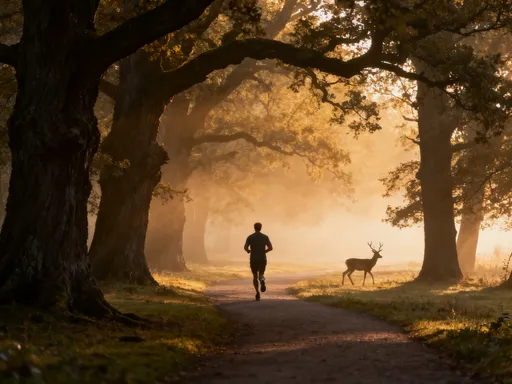
Wildlife thrives in this relatively undisturbed habitat. I spotted red deer grazing at dawn, their silhouettes sharp against the pale sky. Along streams, otter tracks marked the muddy banks, and high above, a pair of peregrine falcons circled on thermal currents. Seasonal changes dramatically reshape the landscape—spring brings carpets of bluebells and primroses, summer turns the hills golden with gorse, autumn paints the trees in warm reds and ambers, and winter cloaks everything in frost and silence. For hikers, this means every visit offers a different experience. Trail markers are clear but sparse, encouraging navigation by map and compass—a skill that reconnects you to the land in a way GPS never can.
Lakes, Glens, and Secret Waterfalls: Off-the-Beaten-Path Gems
One of the greatest joys of hiking in Northern Ireland is the sense of discovery. Even with a map, some of the most beautiful spots feel like accidents—places you find because a path turned unexpectedly, or because rain drove you off the main trail and into the trees. Glenariff Forest Park, often called the “Queen of the Glens,” is a prime example. While it’s known locally, it remains under the radar for many international travelers. The park features a series of looping trails that follow the Glenariff River as it tumbles down from the plateau. Halfway through the route, the trail leads to a viewing platform overlooking Ess-na-Larach waterfall, where water crashes over mossy rocks in a thunderous cascade.
But the real magic happened the day after a heavy downpour. I had planned a short walk near the Antrim Hills, but the rain had swollen the streams, turning dry gullies into rushing channels. Following one of them upstream, I rounded a bend and found a waterfall I hadn’t seen on any map—a narrow ribbon of water pouring down a cliff face, surrounded by ferns and dripping ivy. There was no sign, no railing, no other people. Just the sound of water and the cool spray on my skin. These unplanned moments are what make hiking here so special. They remind you that nature isn’t always on display; sometimes, it reveals itself only to those who move slowly, who pay attention, who are willing to get a little wet and a little lost.
Other hidden gems include the silent lakes of the Fermanagh countryside, where mirror-like waters reflect the sky and surrounding hills, and the secluded trails of the Mourne Mountains, where granite peaks rise abruptly from green valleys. The key to finding these places is not relying solely on guidebooks or apps. Talk to locals at village shops or tea rooms. Ask about “the old paths” or “where the sheep walk.” More than once, a simple conversation led me to a footbridge over a stream or a dirt road that opened onto a panoramic view no tourist brochure had captured. These experiences aren’t about ticking off landmarks—they’re about cultivating presence, about letting the landscape unfold at its own pace.
How to Travel Responsibly in Fragile Natural Environments
With growing interest in outdoor travel comes a responsibility to protect the very places we love. I’ve seen firsthand the effects of carelessness—trampled vegetation along unofficial shortcuts, litter caught in hedgerows, and erosion caused by too many feet on narrow paths. These landscapes, while resilient, are not indestructible. The basalt columns at the Giant’s Causeway, for example, are slowly being worn down by constant foot traffic. In sensitive areas like peat bogs or ancient woodlands, even minor disturbances can take decades to heal. As visitors, we must be mindful of our impact.
The principles of low-impact hiking are simple but powerful. Stick to marked trails to prevent soil erosion and protect plant life. Carry out all waste, including food scraps and biodegradable items—what decomposes in a compost bin may not break down in a cold, wet climate. Avoid feeding or approaching wildlife; observe from a distance. And resist the urge to pick flowers, stack stones, or carve names into trees—these actions may seem small, but they accumulate. Using reusable water bottles, packing snacks in reusable containers, and choosing eco-friendly transportation when possible all contribute to a lighter footprint.
Supporting local conservation efforts is another meaningful way to give back. The National Trust and local environmental groups maintain trails, restore habitats, and educate visitors about the region’s ecology. Donating to these organizations, volunteering for a cleanup day, or simply visiting their centers helps sustain the landscapes we enjoy. Many small businesses, from family-run inns to local guides, also prioritize sustainability. Choosing to stay in eco-certified accommodations or eat at restaurants that source ingredients locally supports a tourism model that values preservation over profit. When we travel with care, we ensure that future generations can experience the same sense of wonder we did.
Why These Landscapes Stay With You Long After You Leave
Months after my trip, I still find myself thinking about the quiet hills, the salt-stung air, the way light fell across a misty valley at dawn. These landscapes don’t just occupy space on a map—they take up residence in the mind. There’s something about being surrounded by ancient rock and open sky that clears the mental clutter, that puts daily worries into perspective. I didn’t return from Northern Ireland with just photographs; I returned with a renewed sense of calm, a deeper appreciation for stillness, and a quiet determination to protect wild places wherever they exist.
Psychologists have long studied the restorative effects of nature, and my experience aligns with their findings. Time spent in natural environments reduces stress, improves mood, and enhances cognitive function. But beyond the science, there’s an emotional truth that’s harder to measure. Standing on a cliff overlooking the sea, or walking through a forest where the only sound is your own breath, you feel connected—to the earth, to history, to something larger than yourself. This isn’t escapism; it’s reconnection. For many women in midlife, juggling family, work, and personal responsibilities, such moments are not a luxury but a necessity. They restore balance. They remind us of who we are beneath the roles we play.
Northern Ireland’s wild heart is not just a destination. It’s a feeling—a sense of awe, of humility, of belonging. And that feeling is worth protecting. Whether you hike its cliffs, wander its glens, or simply dream of doing so, you become part of a quiet movement to preserve what’s real, what’s untouched, what matters. The land doesn’t ask for much. Just respect. Just attention. Just the willingness to walk slowly, breathe deeply, and let it in.